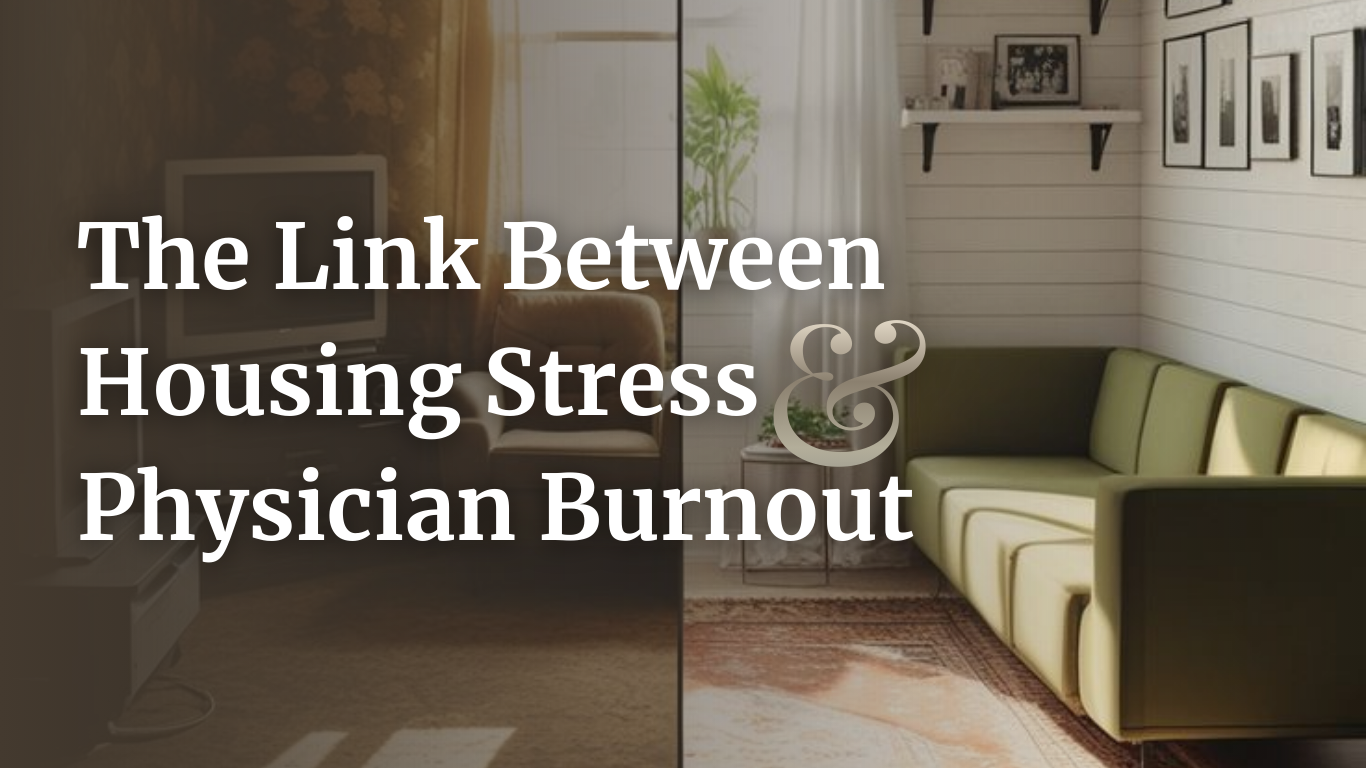
The Link Between Housing Stress and Physician Burnout
Burnout is often discussed in clinical terms. Long hours. Administrative burden. Emotional fatigue.
Yet one powerful contributor is rarely named.
Housing stress.
How housing quietly drains physicians
Housing stress shows up in subtle ways:
- Long commutes that extend already exhausting days
- Maintenance responsibilities that feel overwhelming
- Spaces that never allow true rest
- Financial pressure tied to overbuying
Over time, these stressors compound.
The nervous system connection
A home should allow the nervous system to downshift. For physicians and other medical professionals providing care for patients, that function matters deeply.
When a home adds friction instead of relief, recovery never fully happens. When recover doesn’t happen it becomes extremely challenging to show up for your family, patients, and community in the way that you’d like to.
What supportive housing looks like
Homes that reduce burnout often share traits:
- Predictable maintenance
- Reasonable proximity to work
- Clear separation between work and rest
- Neighborhoods that foster connection
These features protect energy.
A preventive approach
Addressing housing stress early is a form of preventive care.
Physicians and physician families deserve environments that support the work they do for others. It is essential to maintaining the health of our communities that physicians and their families are able to rest and recover in their homes.
Feeling more exhausted than your schedule alone explains?
Download the guide on how housing stress contributes to physician burnout and what supportive housing actually looks like.